From grinding to plunger pressure, everything you need to get a pleasant, aromatic cup of coffee. A guide to coffee preparation using the French Press, with some tips and facts about its origins.
Invented in France in the 19th century and spread around the world under many different names, cafetière à piston, Melior, and plunger coffee, the French Press is still one of the most popular tools for making coffee. It only requires water, coffee, attention to timing and the right grinding.
Spanning France and Italy, the invention of the French Press
Its origins conceal a surprising connection with music: before becoming a design icon, the Melior cafetiere was produced among the lathes of Martin S.A., a historic French factory specialising in clarinets. In the 1950s, Swiss investor and designer Faliero Bondanini chose a musical instrument workshop to create the Chambord, the classic design of the French press in steel and glass that still sets the global standard.
The French Press is also an example of unwitting collaboration: its core technology has Italian origins. It was the inventive genius of the Milanese Attilio Calimani who, in 1929, solved a problem that had plagued the French for almost a century: adding a flexible spring to ensure the filter adhered perfectly to the glass.
Infusion or percolation?
What are its features and how do you make coffee with the French Press?
Coffee drinks are enjoyed in many different ways around the planet, but basically there are only two techniques to extract the precious substances from the coffee beans. Along with two ingredients: water and coffee powder.
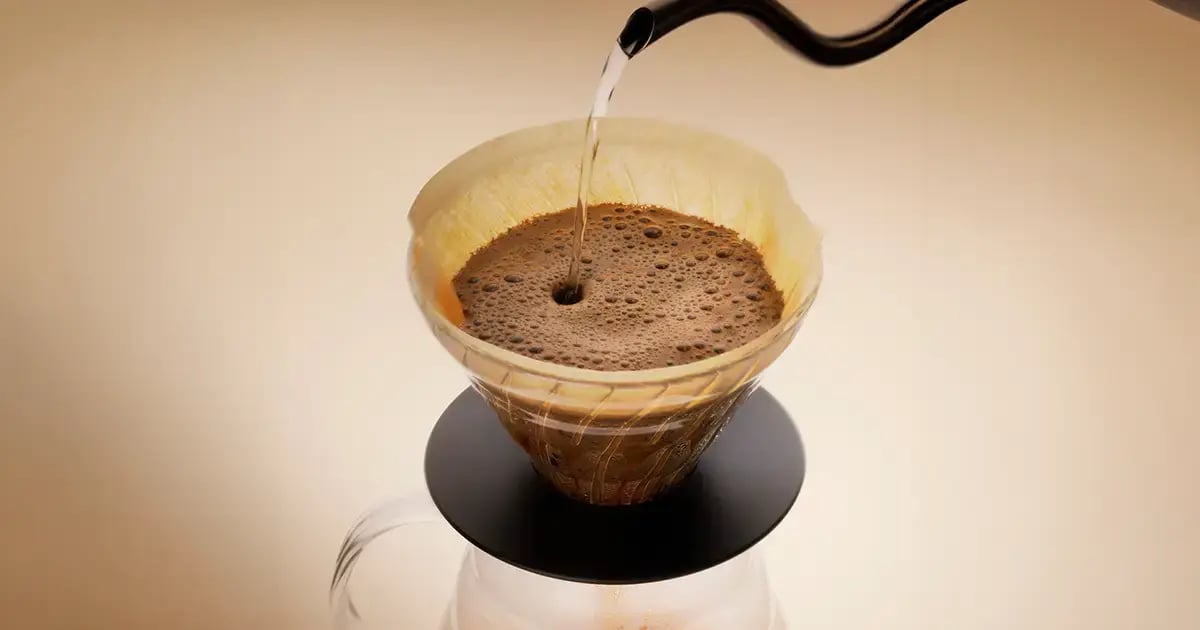
Percolation involves hot water passing through a layer of coffee powder. The water can be driven by a pressure, at about 9 bar in the case of an espresso prepared at a coffee bar, or by the force of gravity, as in the drip machines for an filter coffee, where the water passes through the coffee powder contained in a filter from the top to the bottom, extracting the drink drop by drop.
On the other hand, infusion requires the ground coffee to be left in contact with the hot water for a predetermined time. After, you can allow the powder to settle on the bottom of the cup before drinking, for example, Turkish coffee, or you can filter it, as occurs with the French Press.
Here the extraction takes place slowly, by direct contact, and the result is a coffee with a light body, yet fuller than a filter coffee, with a rich aromatic profile. When made with the Classico illy blend, it offers a particularly sweet taste with notes of toast.
The right grinding
The most significant variable in a French Press brew is the grind size. The right size and distribution of large and small particles, provides a large coffee surface area for contact with the water, to extract the aromas desired in the cup.
Grinding must be medium to coarse, a finer grain would result in a cloudy drink, clog the plunger filter, and release too much bitterness, while an overly coarse grind would produce a less aromatic drink with a watery body.
illy offers ground coffee for filter brewing already ground to the correct particle size, in Classico, with notes of caramel, orange blossom and jasmine; Intenso, with strong cocoa and dried fruit aromas; and Forte, with hints of toast and dark chocolate, as well as in the Arabica Selection for those who want to explore the aromatic profiles of the single-origin coffees.
What is the proportion of coffee to water?
Water to coffee ratio: this is known as the magic formula for coffee brewing, i.e. the ideal proportion between coffee and water to achieve a balanced result in taste and aromas.
The illy recommendation for the French Press is 1:20, i.e. 1 g of coffee every 20 ml of water. For two cups, the standard dose is 15 g ground coffee per 300 ml water.
The dose can, of course, be adapted according to the roasting selected and personal preference, always using the 1:20 ratio as the starting point.
How to make coffee with the French Press step by step
Tools required: French Press 350 ml, kettle with temperature gauge, spoon, timer. A weighing scale is optional, but recommended for precise dosing.
- Heat the jug. Before use, fill the French Press with warm water then empty it. This avoids any thermal shock between the cold glass and the extraction water, which would alter the infusion temperature.
- Add the ground coffee. Place 15 g of coffee into the empty jug.
- Bring the water to the right temperature. The ideal temperature is between 92°C and 96°C. If you do not have a kettle with temperature gauge, let the boiling water stand for about 30 seconds before pouring it.
- Pour the water in a slow, circular motion. Add all the water (300 ml) wetting the coffee evenly.
- Mix gently.
- Cover and infuse for 2-4 minutes. Place the lid with the plunger raised, do not press down. Infusion time is the variable that determines the intensity of taste.
- Press the plunger slowly. Push in a continuous, controlled movement, without jolting, to the bottom of the jug. The resistance must be steady.
- Serve immediately. Do not leave the drink in the jug after pressing down the plunger, otherwise the coffee will continue extracting, becoming progressively more bitter. Pour and consume straight away.
How much infusion time?
Between 2 and 4 minutes, depending on the result you prefer. 2 minutes will give you a coffee with higher acidity and less body; with 4 minutes the coffee will have a more notable bitterness.
Infusion time, together with the grinding, is the main way to customise the brew. The French Press gives the coffee maker complete control: a feature valued by those who like to experiment and refine their technique over time.
The most common errors with the French Press
The French Press is a simple tool, but some recurring errors compromise the result in the cup.
- Water temperature too hot. Water at 100°C extracts bitter components faster than aromatic components. Between 92 and 96°C extraction is more balanced.
- Plunger pressed too quickly. A rapid jolted plunger action creates sediment in the drink. Movement should be slow and smooth.
- Coffee left on the grounds in the jug. Even with the plunger lowered, the ground coffee continues to release substances.
Tips for customising the result in the cup
The French Press lends itself to small variations, adapting the coffee to the drinker’s taste.
- For a more bitter coffee: increase the infusion time up to 4 minutes or slightly increase the coffee dose.
- For a milder, more acidic coffee: reduce the infusion time to 2–2.5 minutes or use a slightly lower dose of ground coffee.
- For a clearer cup: do not pour the last centimetre of liquid from the bottom of the jug where sediment is concentrated.
FAQ
Medium–coarse. An overly fine grain clogs the metal filter and makes the drink cloudy and bitter; an overly coarse grain results in coffee with a poor aromatic profile.
The benchmark proportion is 1 g of coffee per 20 ml of water (ratio 1:20). For two standard cups, 15 g of coffee is used per 300 ml of water. The dose can be adjusted according to the roasting and personal preference.
The ideal infusion time is between 2 and 4 minutes. 2 minutes results in a more acidic drink; 4 minutes and the coffee has more bitterness.
The most common causes are: too fine a grind, excessive infusion time, water too hot (above 96°C), or coffee left in the jug after pushing down the plunger.
Preheat the jug, add 15 g of medium-to-coarse ground coffee for 300 ml of water, pour the water at 92–96°C in a circular motion, mix, cover without pressing the plunger and infuse for 2-4 minutes. Then slowly press the plunger and serve immediately.