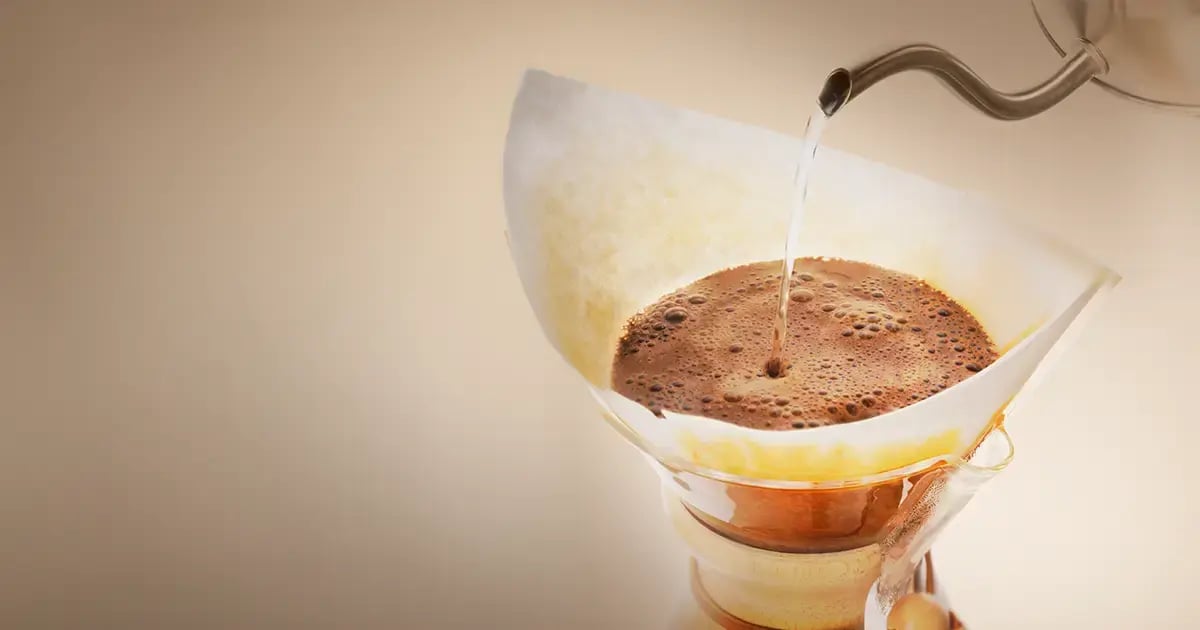
At home and at the coffee bar, there is growing interest in manual coffee extraction techniques. Between fascinating equipment and the rediscovery of old habits, manual brewing transforms preparation into a ritual that adds pleasure to the cup.
Coffee is constantly transforming. Literally, as nearly 29,000 tons* of beans are transformed into millions of cups of coffee every day around the world. But also metaphorically, because the traditions and habits around it have always been evolving.
*ICO International Coffee Organisation data: estimated annual coffee consumption in 2024/25: 175.1 million bags of green coffee
The history of coffee teaches us this, giving us evidence of its innumerable incarnations: it has been a companion to Sufi monks in prayer through their nightly vigils, a catalyst for debates during the Enlightenment, a central feature of high-society in Europe’s historic coffee houses and is now facilitating new forms of socialising as in soft clubbing events. At the same time, the ways in which it has been prepared have changed and techniques have been developed to adapt to the functions that the cup of coffee - in all its forms - needed to fulfil throughout time.
The modern age is no exception. In an era when the hustle and bustle of daily life is counterbalanced by a renewed desire for a slower pace and a return to a way of doing things perceived as more authentic, coffee is now also being prepared using methods that take longer and have a more artisanal approach. These are (also) times of manual brewing.
What is manual brewing
“Manual extraction”: an expression that refers to all coffee brewing methods where the process is managed by human hand. Manual, above all, means control, as these techniques enable direct management of the parameters, such as grinding and dosage of coffee, proportion between coffee and water, length of extraction time and water temperature. It means customisation, because as each of these factors changes, so does the taste, aroma and body of the drink obtained.
Those at home who choose a manual extraction technique for their coffee do so to treat themselves to a special coffee experience, where the pleasure of tasting the drink is combined with the equally important pleasure of preparing it. It’s an experience that takes time, turning it into a small ritual.
Manual brewing at the coffee bar
These techniques are not only savoured within the domestic sphere. In recent years, many venues have also begun to offer manually prepared coffees to their customers, through extraction techniques that are often described in detail in the menu. They are offered to add a modern vibe together with an “once-in-a-lifetime” flavour to trendy coffee shops. The spectacular appearance of the equipment also contributes to the atmosphere, with unusually shaped accessories, mysterious glass jugs and tools that resemble distilling equipment, alternating on the worktop between paper filters and scales.
Even in public settings, these methods shape very specific tasting experiences: almost always enjoyed at a table rather than at the counter, and taking longer than an espresso, they also seem to foster a heightened sensitivity to the beverage's aromas and flavors. Not surprisingly these venues often run tasting sessions, usually of single-origin coffee prepared using different techniques.
It is not uncommon for the extraction process to involve the consumer more directly, when coffee is served at the table in the equipment used to prepare it, such as the French Press or the V60.
Apart from filter coffee, what are the manual brewing techniques
There are many manual brewing techniques, but essentially they rely on two different extraction principles. The ingredients needed, in both cases, are the same: water and ground coffee.
The first method is percolation, which consists of passing water through a layer a bed or puck of coffee. This technique is used for Chemex and V60 brews, where water passes through the powder contained in a paper filter driven by gravity, to produce the drink. The traditional moka pot also uses percolation, but here the water passes through the coffee puck thanks to the pressure generated inside the coffee maker during heating.
The second method is infusion, which involves contact between water and ground coffee for a certain period of time. At the end, the powder can be allowed to deposit on the bottom of the container, as in the case of Turkish coffee, or separated from the drink by filtration, as occurs with the French Press or in the preparation of Cold Brew, which also has the peculiarity of being brewed in cold water and for a very long time, up to 12-14 hours.
Preparation using a syphon straddles both methods, in a spectacular technique that uses both infusion and percolation, with an instrument that consists of two overlapping glass ampoules.
Many of these techniques have distant origins, but have recently been rediscovered.
The characteristics of the drinks
Other parameters also vary along with the extraction type and instrument used. First, grinding, which must be appropriate for the technique used. For example, the moka pot requires a medium, Chemex, V60 and the French Press require medium-coarse as does the Cold Brew. For those who do not grind their coffee at home, the illy tins indicate the preparation technique most suited to the coffee contained.
The proportion, the so-called coffee-to-water ratio, between the two key ingredients differs: that is, the amount of coffee to be used in relation to the amount of water. For the moka pot, for example, illy advises a ratio of 1:10, meaning 1 g of coffee every 10 g of water. This of course determines the most visible difference between the various preparations: the volume in the cup. The variability is very wide, ranging from about 25 ml for a cup of espresso, up to 200 ml for a cup of filter coffee. As a result, the body varies, i.e. the tactile qualities of the drink: from the density of an espresso to the light body of a filter coffee.
Last but not least, there are several characteristics a coffee offers to our senses. Take the 100% Arabica Classico illy blend, in a Chemex, it will produce a drink with a distinct clarity and a prevalence of roasted and dried fruit notes, in the V60 the resulting coffee has a particular aromatic intensity, a marked sweetness and the prevalence of fruity notes in the cup, while the French Press releases a pleasantly bitter taste and aromatic notes including smoke, toast and dried fruit.
Very different experiences, but they have in common an attention to detail and deliberate pace in their preparation that enriches the coffee experience with a ritual that is both new and ancient, that always remains true to itself, even if constantly changing.
FAQ
Manual brewing includes coffee preparation techniques where extraction is controlled by human hand. Management of parameters such as grinding, dose, water temperature and brewing time, enables you to customise the result in the cup and enjoy the preparation as a genuine ritual.
Popular techniques include Moka pot, V60, Chemex, AeroPress, French Press, Siphon and Cold Brew. Some are based on water percolation through ground coffee, others on infusion, while methods such as Siphon combine both extraction modes.
Each technique has specific extraction parameters and produces different sensory characteristics. The taste, aromas and body can vary significantly, offering different interpretations of the same coffee.